
02-19-2026
Metroid Fusion: The Game Dread Was Built On
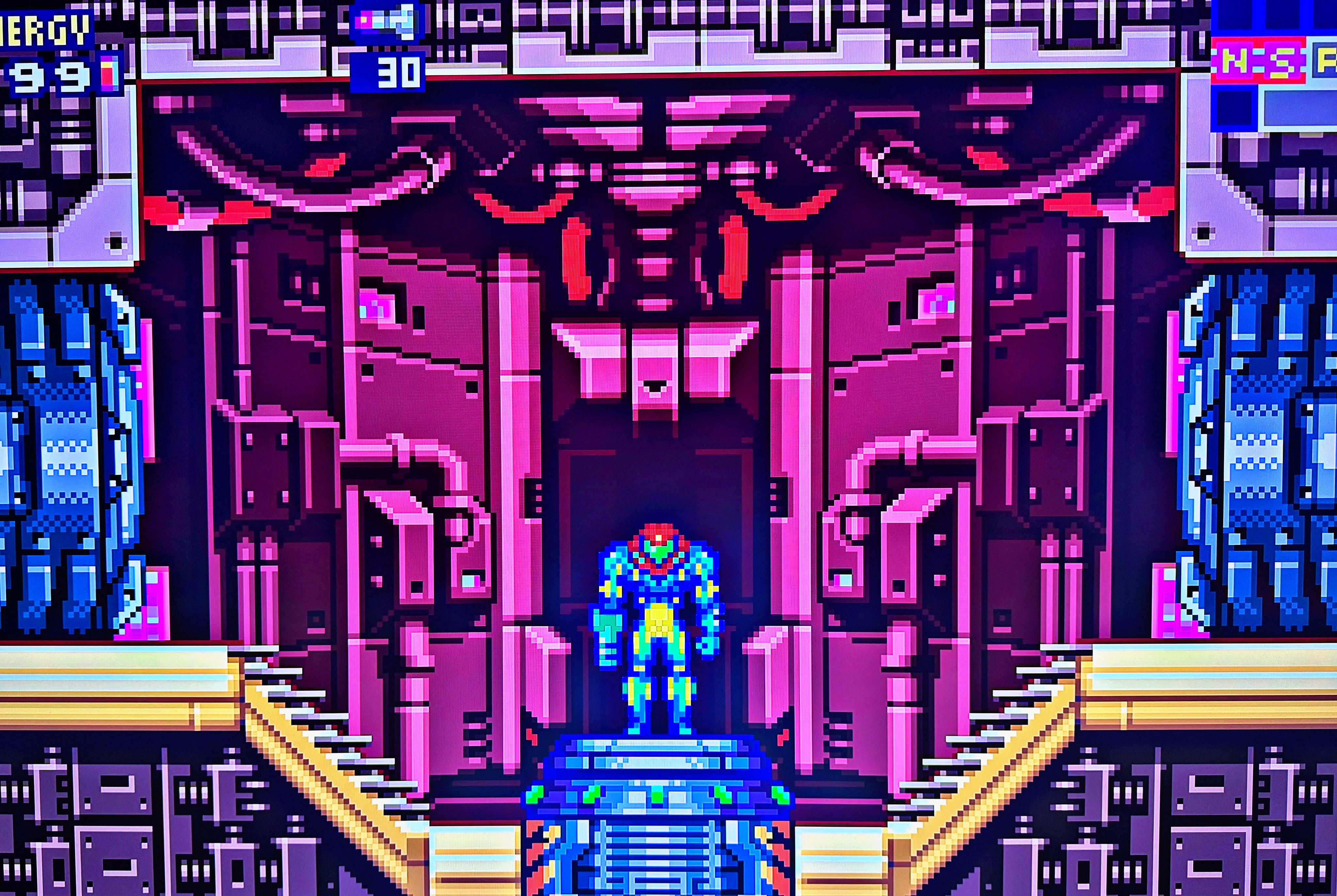
I've played Metroid Fusion before. I knew how it ended. I knew where the save rooms were, roughly, and I knew the SA-X was coming. And yet, booting it up again, I found myself doing something I didn't expect: slowing down. Looking at the walls. Trying to piece things together.
That's the thing about Fusion that nobody talks about enough. It gets under your skin the same way twice.
The Take I Want to Push Back On
The common line on Metroid Fusion in 2024 is that Metroid Dread made it obsolete. Dread is shinier, faster, more mechanically refined — so why go back? It's a reasonable argument. It's also, I think, missing the point.
Fusion isn't trying to be Dread. It's trying to do something harder: make a world feel dangerous and alive on hardware the size of a candy bar, with almost no dialogue, no cutscenes worth speaking of, and a map you have to earn. The fact that Dread builds on it isn't an argument against Fusion. It's the strongest argument for it.
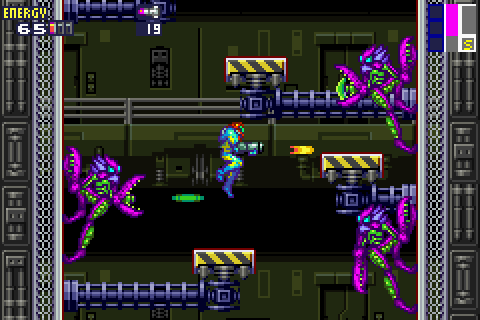
Worth noting: Dread does bring quality of life changes that soften the sting of dying. Losing a life in Fusion carries a little more weight, a little more consequence. Some people will call that a flaw. I'd call it part of what makes the atmosphere feel real. The haunting quality of Fusion's world is inseparable from the fact that failure has a cost.
What Fusion Is Actually Doing
It found the exact midpoint between freedom and frustration. This is harder than it sounds. Metroidvanias live and die by how lost they're willing to let you get. Fusion threads a needle most games in the genre fumble — it's linear enough that you're never wandering in circles, grinding your teeth, but open enough that the next path forward always feels like something you discovered rather than something that was handed to you. Losing never feels punishing. Progress always feels earned.
It accomplishes a remarkable amount in a very small package. Have you noticed how large games are getting? How last year's computer struggles to run the newest releases without upgrades or workarounds? There's an arms race happening in the industry, and more and more often, "bigger" is being mistaken for "better." Fusion is a quiet rebuttal to all of that. Everything it does — the atmosphere, the escalation, the environmental storytelling, the tight controls — fits on a cartridge small enough to lose in a coat pocket. That's not a limitation to work around. That's craft.
The world tells the story so the game doesn't have to. There is barely any exposition in Fusion. What you learn, you learn by moving through space — backgrounds shift, animations change, the atmosphere thickens the deeper you go. By the time you understand what's actually happening on the BSL station, you've pieced it together yourself, beat by beat, room by room. That's not a design shortcut. That's confidence.
The escalation is the point. Running into old bosses — now corrupted, cloned, wrong — hits differently when you remember fighting the originals. The game knows you remember. It's counting on it. The deeper you get, the more the world closes in, and Fusion earns that dread (small d) honestly, through accumulation rather than cheap jump scares.
The Part Where I Stopped Playing for a Minute
There's a stretch in the middle of Fusion where the game just... clicks. You're not reading anything. You're not following a waypoint. You're following a feeling — something about the color of a background, the way an animation loops, the silence in a room that should have enemies in it. You start asking questions the game hasn't answered yet. Why is this section sealed off? What happened here? What am I about to walk into?
I found myself stopping in corridors just to look. Not to find a secret, not to optimize a route — just to understand where I was. That kind of environmental pull is rare. Most games tell you a story. Fusion makes you want to find one.
And then you turn a corner and something you recognize is there, but wrong, and the atmosphere you've been soaking in suddenly has teeth.
The Verdict
Metroid Fusion is worth your time — with two honest caveats.
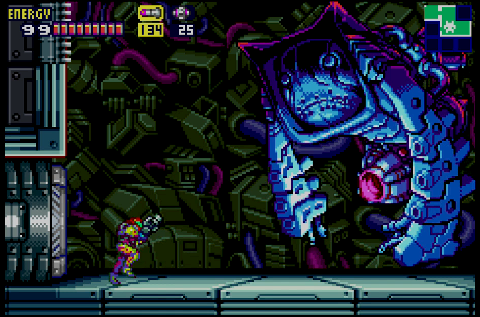
The first is the difficulty curve, and it's a real one. Somewhere between the midgame and the Nightmare boss fight, the careful tension Fusion had been building tips over into something steeper and less forgiving. The precision the game suddenly demands is a significant jump — and on a GBA, precision has a physical cost. If your hands are on the larger side, the cramped layout of that little handheld makes fine motor control genuinely uncomfortable over extended play sessions. If you can get this on a larger controller — through Nintendo Switch Online, for instance — you'll have a meaningfully easier time, though patience will still be required regardless of how you play.
The second caveat is milder: the pacing suffers in a few isolated spots for reasons that feel more like design oversight than deliberate challenge. For a game that otherwise controls its tension so precisely, those spikes stick out.
But for anyone who loves tight, well-paced action games — people who care about feel as much as features — Fusion delivers something that hasn't aged out. The controls are clean, the world is oppressive in the best way, and the loop of exploration and discovery still works exactly as intended.
Is it surpassed by Dread? In some ways, yes. In the ways that matter to me on this playthrough, no.
What To Do Next
Play Metroid Dread. Not instead of this — after it. Dread is a better game in several measurable ways, but it's also a game in conversation with Fusion, and you'll feel that conversation differently having played this one first. The callbacks land harder. The design evolution makes more sense. You'll understand what they kept, what they fixed, and what they decided to build on — including the places where they decided a little more mercy wouldn't hurt.
Fusion is where that conversation started. It's worth knowing the beginning.
Good, not perfect. Essential context. Highly recommended for the right player.